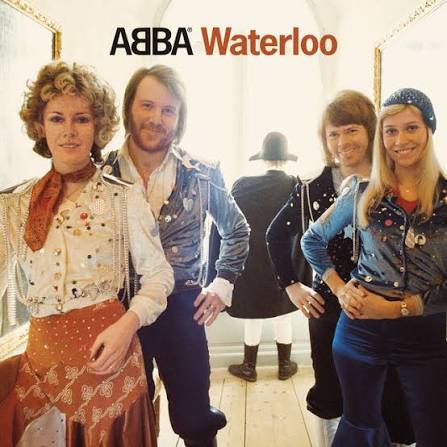
Released on March 4, 1974, ABBA’s Waterloo is a mix of pop, Europop, and glam rock.
The song won the Eurovision Song Contest for Sweden and became the breakthrough that introduced ABBA to an international audience.
One of the song’s strengths is its energy. The piano, electric guitars, driving drums, and bright vocal harmonies give Waterloo an infectious sound from beginning to end. Agnetha Fältskog and Anni-Frid Lyngstad’s voices work together beautifully, particularly during the chorus. On the other hand, the production can feel almost too busy at times. There is so much happening musically that some of the smaller details can get buried under such huge sound.
The lyrics use Napoleon’s defeat at Waterloo as a metaphor for surrendering to love is smart, playful, and certainly memorable as an unconventional love song. However, the comparison is fairly simple and doesn’t offer the emotional depth found in some of ABBA’s later songs. This is a song designed more for fun than depth.
My favourite part is the chorus. It explodes with energy and is almost impossible not to sing along with. The repeated hook can become a little repetitive after several listens, particularly because the song rarely slows down or changes mood.
Despite this, Waterloo is great because it never pretends to be anything other than a big, colourful pop song. Its distinctive harmonies, and different lyrical content give it a personality that many songs from the era lack.
The song has both the original Swedish version and an English version, so everyone mostly can understand it.
Waterloo may be somewhat repetitive and easy in its lyrics, but its energy, memorable melody, and iconic ABBA sound easily outweigh its flaws.